


Drywall screw specifications
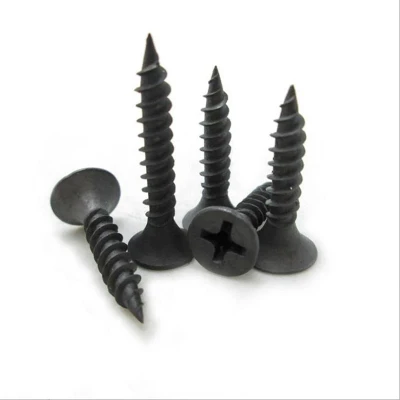
Drywall screw specifications typically include length, thread type, and gauge (such as #6 or #8). Length should be chosen based on drywall thickness, for example 1/2 inch thick drywall use 1-1/4 inch or 1-5/8 inch screws. Thread types are divided into coarse threads and fine threads. Coarse threads are suitable for wooden beams, and fine threads are suitable for metal beams. Common sizes are #6 and #8, which are suitable for most drywall applications.
Every size is in stock, and custom sizes of drywall screws are available
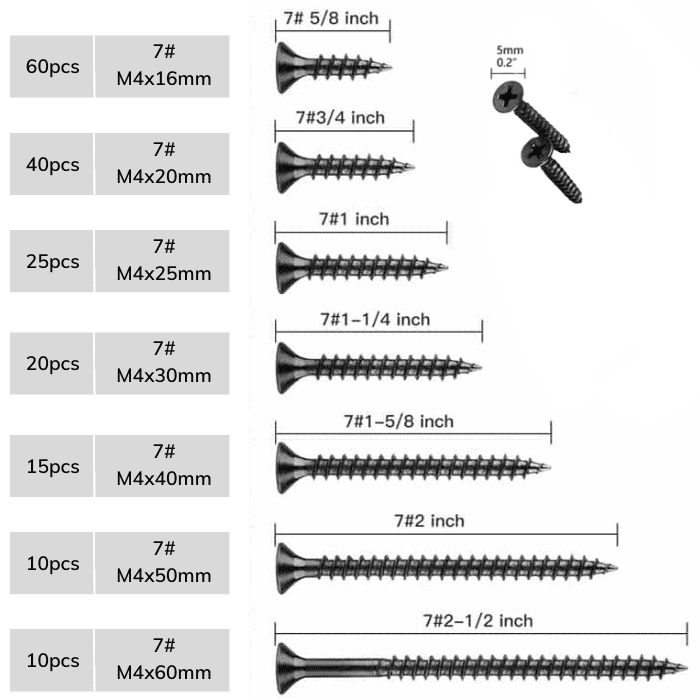
Key features of our drywall screws
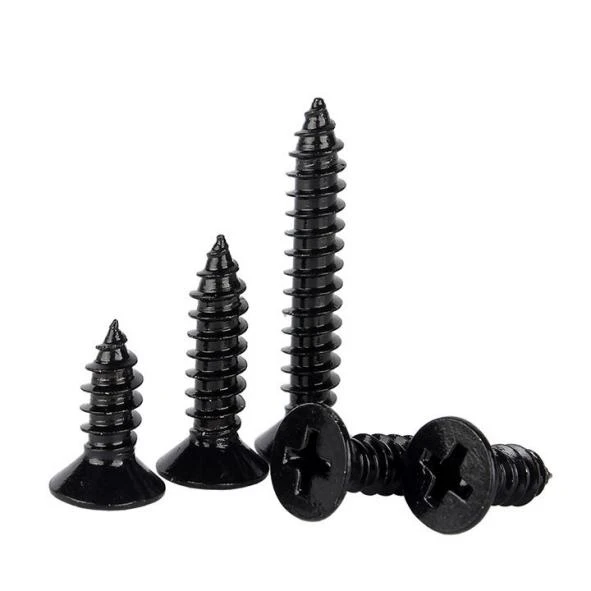
1. Thread type: Drywall screws are usually divided into coarse threads (W type) and fine threads (S type). Coarse threads are suitable for wooden beams and provide stronger grip; fine threads are suitable for metal beams and have better self-tapping properties.
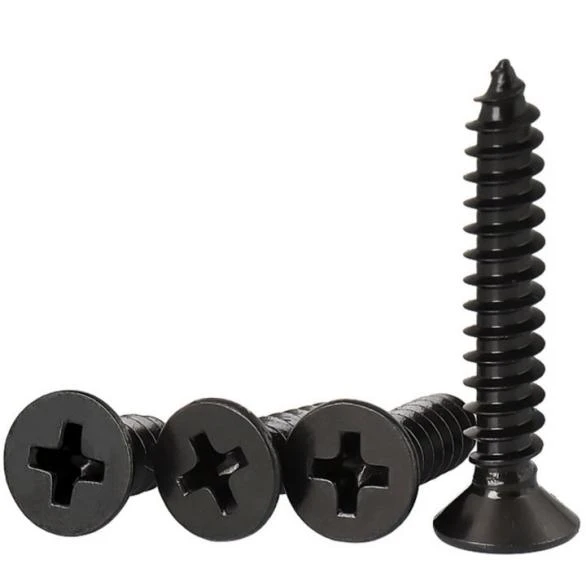
Head Design: The heads of drywall screws are typically flared or drum-shaped, a design that helps penetrate deep into the drywall and compact the material underneath, ensuring a smooth surface.
Length selection: The length of drywall screws should be selected according to the thickness of the gypsum board. For example, 1/2-inch-thick drywall typically uses 1-1/4-inch or 1-5/8-inch screws, while thicker drywall will require longer screws.
3. Specifications and materials: The specifications of drywall screws are usually represented by #6 or #8. The larger the specification, the smaller the diameter of the screw. Drywall screws are typically made of hardened steel and may be coated with a rust-resistant coating, such as a phosphate coating, for added durability and corrosion protection.
4. Self-drilling function: Some drywall screws have a self-drilling tip design and can be directly inserted into gypsum boards and metal beams without pre-drilling, which improves installation efficiency.
5. Weight-bearing capacity: Drywall screws have a weight-bearing capacity of approximately 20 pounds, while anchors can carry up to 50 pounds. Where heavy objects are hung or there are no beams behind the wall, drywall anchors should be used to ensure structural stability.
6. Applicable scenarios: Drywall screws are suitable for fixing gypsum boards to wooden beams, light steel beams and heavy steel beams. Different types of screws are suitable for different installation scenarios, such as W-type screws for wooden frames and S-type screws for metal frames.
7. Extra features: Some drywall screws also have features such as anti-slip head designs, phosphate treatments, and coatings that help improve the performance and durability of the screws.
Drywall screw applications:
1. Fasten drywall: Drywall screws are a key tool for fastening drywall to wood joists or metal frames. They typically have a flared head that digs deep into the drywall and compacts the material underneath, creating a smooth finish.
2. Interior Construction: Drywall screws are widely used in interior construction projects such as homes, offices, schools, etc. because of their cost-effectiveness and ease of use.
3. Special environments: In humid environments, such as bathrooms or basements, you can choose drywall screws that are moisture-proof and coated with anti-corrosion materials.
 |  |
Drywall screw types | Material | Typical applications | How to use |
Coarse Thread Drywall Screws | carbon steel | Plasterboard fixing, construction | Drill in using an electric drill |
Fine Thread Drywall Screws | carbon steel | Plasterboard fixing, construction, machinery | Drill in using an electric drill |
self drilling drywall screws | carbon steel | Gypsum board fixing, construction industry | Drill in using an electric drill |
Custom Drywall Screws | Customizable | Professional application | Tailored to application |
Detailed description
Coarse Thread Drywall Screws:
lApplication: Suitable for fixing gypsum boards to wooden cross arms.
lInstallation method: Use tools to drill in the screws.
lAdvantages: Strong grip, easy to install, good surface treatment, good fatigue resistance
Fine thread drywall screws:
lApplication: Gypsum board fixing, construction, machinery.
lInstallation method: Use an electric drill to drill in.
lAdvantages: Strong self-locking ability, good sealing performance, fine-tuning function, and strong static load capacity.
Self-drilling drywall screws:
lApplication: Gypsum board fixing, construction industry.
lInstallation method: Use tools to drill in the screws.
lAdvantages: No need for pre-drilling, efficient installation, firm fixation, aesthetics, wide application range.
Custom Drywall Screws:
lApplication: Designed for specialized applications requiring unique specifications.
lInstallation method: Customized installation according to specific application requirements.
lBenefits: Customized specifications to meet unique project needs, ensuring optimal performance.
Customization options:
Custom Sizes: We offer screws in standard and custom sizes to meet specific project requirements. Our advanced processing capabilities ensure a perfect fit for your application.
Material Selection: Depending on the application and environmental conditions, we offer screws made of stainless steel, galvanized steel, carbon steel and other specialty materials.
Surface Treatments: For enhanced corrosion resistance and durability, we offer a variety of surface treatments including galvanized, galvanized and custom coatings.

Cabinet screw production process
1. Material selection: Select appropriate materials based on required strength and environmental conditions.
2. Cutting: Cut the material into the desired shape and size.
3. Forging: Using high-pressure machinery to shape the bolts.
4. Threads: Create precise threads to ensure secure fastening.
5. Heat treatment: Enhance the strength and durability of bolts.
6. Surface treatment: Apply anti-corrosion coating.
7. Quality inspection: Ensure that each bolt meets strict quality standards.
8. Packaging: Pack completed bolts for shipment.
Global standards for drywall screws
Global standards for drywall screws primarily use the ISO metric thread standard, which is one of the most commonly used universal thread types in the world. The basic outline and dimensions of ISO metric threads are defined by ISO 68-1, and the basic dimensions of threads are detailed in ISO 261. In addition, ISO has also developed relevant tolerance standards, such as the ISO 965 series. These standards ensure the interchangeability of screws produced in different countries and regions and avoid disputes between manufacturers and buyers.
The basic characteristics of ISO metric threads include:
1. Thread shape: symmetrical V-shaped thread with a cusp angle of 60 degrees.
2. Thread size: mainly defined by the nominal diameter (D) and pitch (P) of the thread. In the ISO standard, the nominal diameter of the thread is measured in millimeters, and the pitch can also be expressed in millimeters.
3. Thread type: including coarse thread, fine thread and ultra-fine thread, suitable for different applications.
In addition to ISO standards, various countries and regions also have their own national standards, such as China's GB standard, the United States' ANSI/ASME standard, Germany's DIN standard, Japan's JIS standard, and the United Kingdom's BSW standard. These standards may have special requirements in some specific applications, but ISO metric thread has become the main global standard for general-purpose fasteners such as cabinet screws due to its broad international acceptance and applicability.
Common pairings of drywall screws include:
1. Coarse-thread drywall screws: suitable for connecting gypsum boards and wooden keels, with strong grip and firmness.
2. Fine-thread drywall screws: suitable for connecting gypsum boards and metal keels, with better penetration and adaptability.
3. Self-tapping or self-drilling drywall screws: no pre-drilling required, suitable for metal studs or frames