



Electric Drill
What Is Electric Drill?
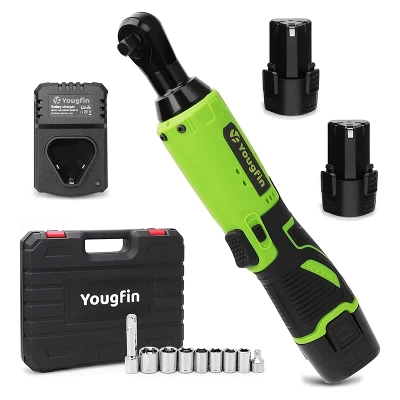
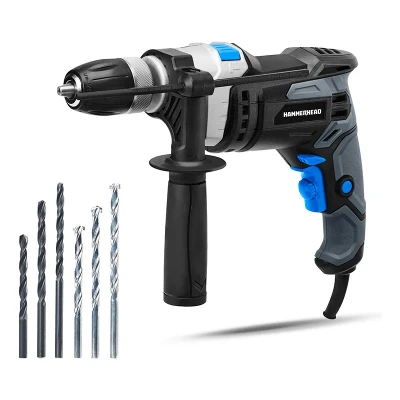
An electric drill typically consists of a handheld power tool with a rotating cutting or driving tool attachment. It usually has a pistol grip and a trigger switch to control the rotation of the drill bit. The body of the drill contains the motor and gearing to drive the bit. The drill bit is typically held in place by a chuck, which allows for easy removal and replacement of the bit. Electric drills come in various sizes and designs for different purposes, but they generally share these common features.
Advantages of Electric Drill
Efficiency
Electric drills are powered by electricity, which allows for faster and more consistent drilling compared to manual drills.
Power
Electric drills can provide high levels of torque, making them suitable for drilling into tough materials such as metal or concrete.
Versatility
Many electric drills come with adjustable speed settings and reversible functionality, making them versatile for various drilling and driving tasks.
Convenience
Electric drills eliminate the need for manual effort, reducing fatigue and making them easier to use for extended periods of time.
Precision
Electric drills often come with features such as depth stops and level bubbles, allowing for more precise drilling.
Accessories
Electric drills can be used with a variety of attachments and accessories, expanding their functionality for tasks such as sanding, polishing, and mixing.


Why Choose Us
High quality
We take pride in the craftsmanship of our products and ensure that each one meets our strict standards for quality.
Customized services
We understand that each customer has unique manufacturing needs. That's why we offer customization options to cater to your specific requirements.
Rich experienc
Dedicated to strict quality control and attentive customer service, our experienced staff is always available to discuss your requirements and ensure complete customer satisfaction.
One-stop solution
We can offer a range of services, from consultation and advice to product design and delivery. It is a convenience for the customers, as they can get all the help they need in one place.

Electric pickaxes
The electric pick is a double-insulated hand-held power tool powered by a single-phase series motor, and the power of the motor is used to make the pickaxe have the effect of chiseling the ground. It is very powerful and powerful, and it is completely unafraid of hard concrete and stone, but the pickaxe head of the electric pick does not rotate, only chisels.
Electric hammer
The rotary hammer relies on rotation and hammering to work, with a very high individual hammering force and a hammering frequency of 1,000 to 3,000 per minute, which can produce significant force. Compared to percussion drills, electric hammers require minimal pressure to drill into hard materials such as stone and concrete, especially relatively hard concrete.
Percussion drills
Impact drills rely on rotation and impact to work, and can be used on natural stone or concrete. When the percussion drill is working, there is an adjustment knob at the drill bit chuck, which can be adjusted in two ways: ordinary hand electric drill and percussion drill, so it has the function of ordinary hand electric drill, and can also drill reinforced concrete like an electric hammer, but the effect is not good.
Hand drill
Hand drills are only available in the rotation mode and are especially suitable for drilling holes in materials that require very little force, such as cork, metal, brick, tile, etc. The electric drill only relies on the motor to drive the transmission gear to increase the rotation force of the drill bit, so that the drill bit does scraping on metal, wood and other materials.
Application of Electric Drill
Decoration scene
In the process of home decoration, you often encounter places that need to be pierced through the wall, punching holes, and the installation of equipment, which require the use of hand drills, but unless you decorate this scene, most of them are completed by decoration workers.
Scenes of hanging things on the wall
For example, hanging a photo wall, hanging a wedding photo or a painting, installing a shelf in the kitchen and bathroom, etc., all of these scenes need to use a hand drill.
Home maintenance scene
Furniture such as tables and chairs will inevitably loosen after being used for a long time, and can be re-punched and fixed with a hand drill; some equipment installed on the wall needs to be reinforced for a long time due to gravity, and a hand drill is also needed at this time; some old equipment screws are rusty and cannot be unscrewed, and can be unscrewed with a hand drill.
Before using a drill bit for the first time, it is important to familiarize yourself with the structure of the tool. The body of the drill bit is fitted with a motor, while the chuck is located in front and is used to hold the drill bit in place. The trigger is located on the back of the drill bit and is used to start and stop the motor. To attach the drill bit, you need to first release the chuck by rotating it counterclockwise. Then, insert the drill bit into the chuck and rotate clockwise to tighten it. Once the drill bit is secured, you can start drilling. To start drilling, place the tip of the drill bit on the desired drilling point and gently squeeze the trigger to start the motor. When drilling, gently apply pressure to prevent the drill bit from slipping. When you're done, release the trigger to stop the motor. Finally, release the chuck by rotating the chuck counterclockwise and removing the drill bit. Keep these simple steps in mind and you'll be drilling like a pro in no time.

Components of Electric Drill
Engine
The motor is the heart of the drill and determines its power. There are drills with electric or battery motors, each with its advantages and disadvantages. Electric drills typically offer more power, while battery-powered models are more portable and do not require a nearby outlet.
Chuck
The chuck is the device into which the drill bit is inserted. It can be key or quick tightening. The key chuck requires a special wrench to tighten and loosen the bits, while the quick-tightening chuck allows you to change bits more easily and quickly.
Speed
Drills can have single or multi-speed, allowing you to adjust the rotation speed of the bit depending on the material you are drilling. Variable speed drills are ideal for jobs that require greater precision.
Handle
The handle is the part of the drill that you hold in your hand. It can be pistol-shaped or T-shaped. The choice of the handle depends on your personal preferences and the comfort it offers you when using the drill.
Light switch
The switch is the button that turns the drill on and off. It can be trigger or push button. The trigger switch is activated by pressing the trigger with your finger, while the push button switch is activated by pressing a button.
Additional functions
Some drills come with additional features that can be useful on certain projects. For example, some models have a percussion function, which allows you to drill hard materials such as concrete. Other drills may have built-in LED lighting to illuminate the work area.
The Main Features to Consider When Buying an Electric Drill
Power source
Electric drills can be either corded or cordless. Corded drills offer consistent power and are ideal for heavy-duty tasks, while cordless drills provide greater mobility and flexibility.
Motor power
The power of a drill's motor is typically measured in watts (for corded models) or volts (for cordless models). A higher wattage or voltage generally translates to more powerful drilling capabilities.
Speed control
Variable speed control allows you to adjust the drill's speed based on the material you're working with and the type of task you're performing. For example, drilling through soft materials like wood may require a higher speed, while drilling through metal or concrete may necessitate a slower speed. Look for a drill with a wide range of speed options to ensure maximum versatility.
Chuck type
The chuck is the part of the drill that holds the drill bit in place. There are two main types of chucks: Keyed and keyless. Keyed chucks require a special key to tighten and loosen the chuck, while keyless chucks can be adjusted by hand.
Ergonomics and comfort
A comfortable and ergonomic design is crucial, especially for extended use. Look for a drill with a comfortable grip, well-balanced weight distribution, and intuitive controls. Additionally, some drills come with features like an integrated led light or a belt clip for added convenience.
How to Choose the Right Drill Bit for Your Electric Drill
Motor power
The power of a drill's motor is typically measured in watts (for corded models) or volts (for cordless models). A higher wattage or voltage generally translates to more powerful drilling capabilities.
Speed control
Variable speed control allows you to adjust the drill's speed based on the material you're working with and the type of task you're performing. For example, drilling through soft materials like wood may require a higher speed, while drilling through metal or concrete may necessitate a slower speed. Look for a drill with a wide range of speed options to ensure maximum versatility.


Chuck type
LThe chuck is the part of the drill that holds the drill bit in place. There are two main types of chucks: Keyed and keyless. Keyed chucks require a special key to tighten and loosen the chuck, while keyless chucks can be adjusted by hand.
Ergonomics and comfort
A comfortable and ergonomic design is crucial, especially for extended use. Look for a drill with a comfortable grip, well-balanced weight distribution, and intuitive controls. Additionally, some drills come with features like an integrated led light or a belt clip for added convenience.
How to Maintain Electric Drill
Regardless of where you store it, keep your power drill away from water. Water and power drills don't mix. Assuming you have an electric power drill -- whether battery or corded -- water can permanently damage. Additionally, water can cause your power drill to rust. You'll need to store your power drill in a dry environment to protect it from water damage.
Power drills generate heat during use. As the head spins, it will generate heat due to friction. This is completely normal and isn't reason for concern. With that said, you shouldn't store your power drill if it's still hot. If you immediately transfer your power drill to a case after using it, the heat will remain trapped. Instead, wait for your power drill to cool before storing it.
Don't forget to lubricate your power drill on a regular basis. You can refer to the owner's manual for more information on how to lubricate your power drill. Most power drills support lubricant. You can apply a lubricant, such as oil, to the chuck so that it spins more freely.
In addition to lubricating, you should clean your power drill regularly. All power drills will accumulate dirt and debris during use. When drilling a hole into a surface, some of the material within that surface will be removed. As it exits the surface's hole, the material will land on your power drill. You can clean your power drill using compressed air. A few blasts of compressed air should dislodge and remove most of this debris.
You should replace dull bits as well. A bit, of course, is a small tool that's secured to the chuck of a power drill. There are drill bits, for instance, that are used to drill holes into surfaces. Over time, bits can become dull. They'll lose their otherwise sharp point, which can make them harder to use. Replacing dull bits will improve the performance of your power drill while also reducing unnecessary wear and tear.
Material of Electric Drill
Made of metal
Metal electric drills usually use high-speed steel or cemented carbide steel as the drill bit, and the drill bit part is connected with the shank by friction welding. This material of electric drill has good cutting performance when drilling, and can drill holes quickly. However, metal drills are relatively heavy, and prolonged use may make people's arms sore.
Polymer materials
The drill bit of polymer material is made of high-strength engineering plastics, which has the characteristics of light weight, low price and easy use. This kind of drill is suitable for small diameter drilling, but the cutting performance is relatively poor, and it is easy to jam or burn out the drill bit.
Tungsten steel alloy
Tungsten steel alloy is a material with high hardness and high wear resistance, which is often used in the manufacture of high-speed cutting tools. This material has high drilling accuracy and cutting performance, and can drill quickly and not easily seized. However, tungsten carbide alloy drill price is relatively high and is not suitable for all users.
Process of Electric Drill
Design and development of electric drill
The design of the electric drill to consider factors such as physical structure, motor power, battery capacity, shell material, etc., and continuously optimize it in combination with market demand and user feedback. After the design is completed, it is necessary to prototype and test to ensure that the performance and quality of the product meet the requirements.
Raw material procurement
The manufacture of electric drillthe use of a variety of raw materials, including motors, batteries, housings, circuit boards, and more. Manufacturers need to cooperate with suppliers to purchase raw materials according to the product production plan, and conduct quality inspection of the purchased materials.
Shell manufacturing
First, the mold is made according to the design drawings to produce the parts of the shell of the drill. The individual parts are then injection molded, molded, cut and other processes, and finally surface treated and sprayed.
Motor processing
In the process of motor processing, it is necessary to wind the copper wire on the core of the motor, install parts such as bearings and magnets, and assemble it into a motor device.
Circuit board assembly
Assemble the pre-made circuit board with motors, batteries and other parts, and test and debug to ensure that it is in a healthy state.
Finished product assembly
Assemble all parts of the production, and inspect and test the whole to ensure that the product meets the expected performance and quality standards.
Testing and inspection
After the production is completed, it needs to be rigorously tested and inspected, including static testing and dynamic testing. The static test is to verify the parameters and characteristics of the drill, and the dynamic test is to check the operating status and efficiency of the drill. The test results are compared with product quality standards, abnormal products are detected and treated.
Precautions for Using a Electric Drill
Wear protective gear
When operating an electric drill, it is crucial to wear safety glasses to shield your eyes from any flying debris, such as wood or metal shavings, that may be produced while drilling. This helps in preventing any potential damage to the eyes.
Secure loose clothing and hair
Before using an electric drill, ensure that all loose clothing is securely fastened and long hair is tied back. Loose clothing and hair can easily get entangled in the rotating parts of the drill, leading to severe injuries.
Use the right drill bit
Choosing the appropriate drill bit for the material you are working on is vital. Different materials require different types of drill bits; for example, wood requires wood bits, metal requires metal bits, and masonry requires masonry bits.
Check the equipment
Before starting the drilling process, it is essential to inspect the drill to ensure that it is in proper working condition and all its parts are secure. Check the cord for any damage, ensure the chuck is tight, and verify that the drill bits are sharp and free from rust or damage.
Hold the drill securely
Holding the drill securely with both hands is crucial to maintain control of the tool. Avoid using excessive force as it can lead to loss of control and potential injury. A firm grip allows for precise drilling and helps prevent any slippage that might occur due to the drill’s torque or the material’s resistance, ensuring a safer and more accurate drilling experience.
Work in a well-lit area
Working in a well-lit area is essential for visibility and precision. A well-illuminated workspace allows you to see the workpiece clearly, mark drilling points accurately, and monitor the drilling process effectively. It also helps in identifying any potential hazards in the workspace, such as obstacles or clutter, reducing the risk of accidents.
Unplug or remove battery when not in use
To avoid any accidental activation of the drill, always unplug corded drills or remove the battery pack from cordless drills when they are not in use or when changing drill bits. This practice ensures that the drill does not start unexpectedly, which can lead to injuries, especially when handling the drill bit.
Avoid drilling near electrical and plumbing lines
When drilling into walls, floors, or ceilings, exercise caution to avoid hitting electrical wires or plumbing. Striking such utilities can lead to serious consequences, including electric shocks or water damage. Use a stud finder to locate wires and pipes before drilling, and always refer to building plans or consult a professional if unsure.
Keep bystanders at a safe distance
Ensuring that other people, especially children, are at a safe distance from your work area is crucial to avoid any injuries to bystanders.Flying debris or a loss of control of the drill can pose a risk to anyone in the vicinity. By maintaining a clear and secure workspace, you can prevent accidents and ensure the safety of those around you.
Use clamps to secure workpieces
Securely clamping the material you are drilling is essential to prevent it from moving during the drilling process. A moving workpiece can lead to inaccurate drilling and can also cause the drill to slip, posing a risk of injury. Using clamps to hold the workpiece firmly in place ensures precision and safety.
Read the manual
Always read the user manual that comes with the drill to understand its operation, features, and safety precautions thoroughly. The manual provides specific information about the drill model, including its capabilities and limitations, and offers guidance on how to use the tool safely and effectively.
Our Factroy
Shuifu Hanyang Machinery Technology Co., Ltd. is a company specializing in high-strength fasteners, hardware accessories, mechanical parts and other products, integrating production, sales, and research and development. It operates in the spirit of "operating with integrity and advocating standards" concept, give full play to regional and industrial advantages, serve customers around the world, and provide professional fastener connection solutions.

FAQ
We're professional electric drill manufacturers and suppliers in China, specialized in providing high quality custom service. We warmly welcome you to wholesale cheap electric drill from our factory.
8 32 Nuts, Concrete Breaker Drill, Stainless Steel Rivets