


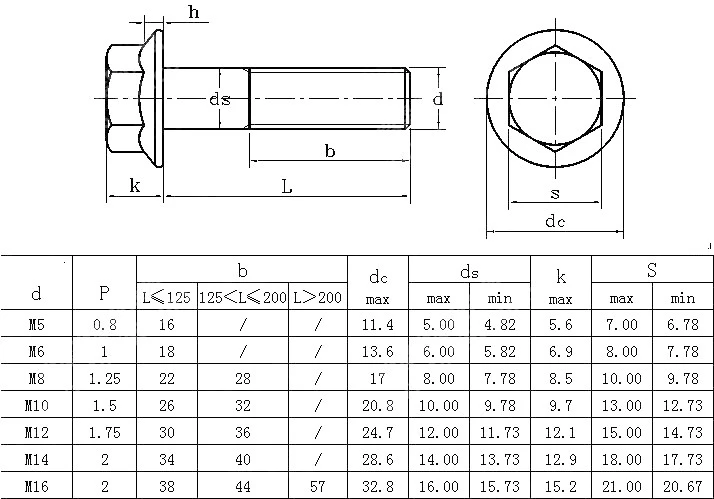
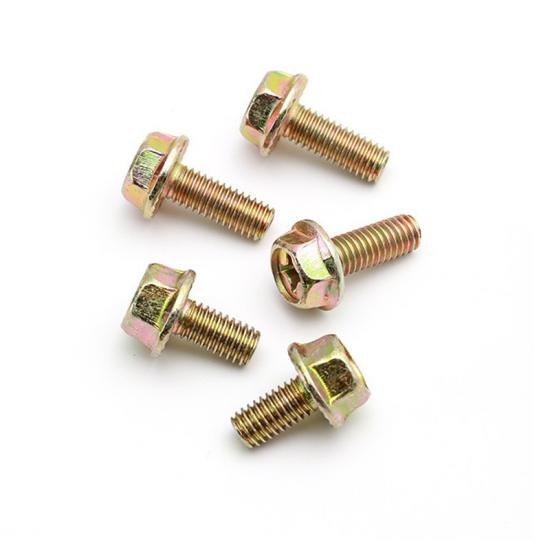
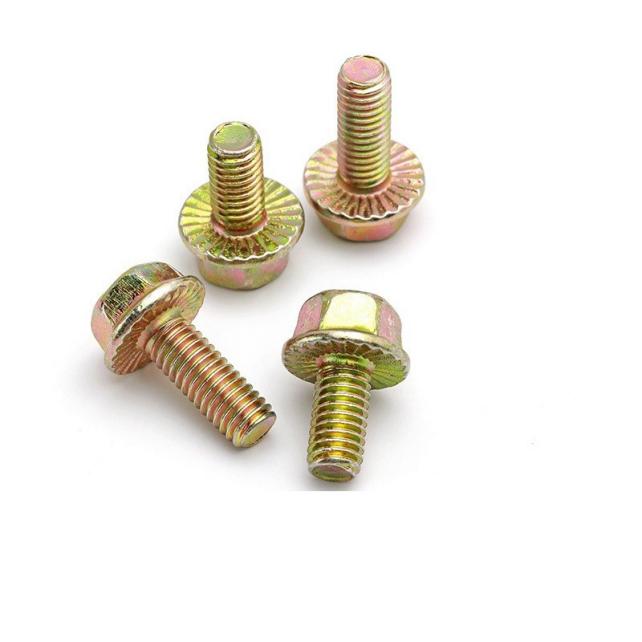
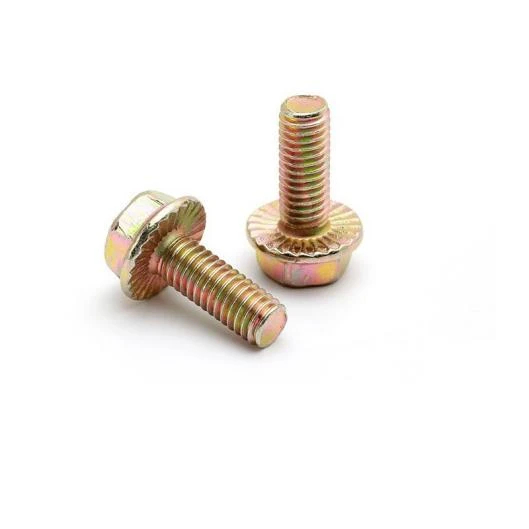
The specifications of hexagonal flange bolts
mainly include head type, surface color and material. ‌ Common head types include flat head and concave head. Surface colors include white plating, military green, colorful yellow, etc., and materials include iron and stainless steel.
Almost all sizes are in stock. Fast delivery and shipped in bulk. Custom fasteners can be produced overnight if needed.
 |  |  |  |
Main features of hexagonal flange bolts
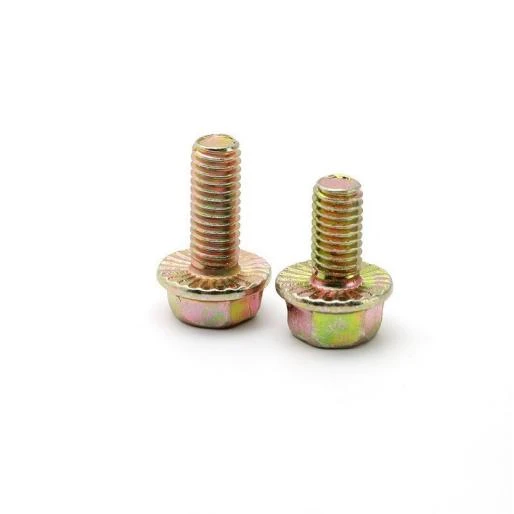
‌Structural design‌: Hexagonal flange bolts are composed of a hexagonal head, a flange plate, and a screw rod. Its unique hexagonal design and flange structure increase the contact area between the bolt and the fastened surface, which can disperse pressure and reduce damage to the base material. It is especially suitable for soft materials or applications where indentation needs to be avoided‌ .
‌Performance Advantages‌:‌High pre-tightening force‌: Hexagonal flange bolts have a large ratio of support area to stress area and can withstand higher pre-tightening force to ensure the firmness of the connection‌.
‌Good anti-loosening performance‌: Due to the existence of the flange, the bolts can effectively prevent loosening when subjected to vibration or impact, ensuring the stability of the connection‌.
‌Easy installation and disassembly‌: Installation and disassembly can be completed only with a wrench, without the need for additional tools, which greatly improves work efficiency‌.
‌Strong corrosion resistance‌: Usually made of high-quality materials, such as SCM435 chromium-molybdenum alloy steel, etc., it has high corrosion resistance and is suitable for various harsh environments.
‌Application scenarios‌: Hexagonal flange bolts are widely used in situations that require high connection strength, such as the manufacturing and maintenance of mechanical equipment, the support and fixation of construction projects, and the connection of key components in automobile manufacturing. In these areas, hexagon flange bolts can provide solid support and connections to ensure the safety and stability of equipment and buildings.
‌Differences from other bolts‌: Compared with ordinary bolts, hexagonal flange bolts have a larger ratio of support area to stress area, can withstand higher pre-tightening force, and have better anti-loosening performance. Ordinary bolts usually only include a hexagonal head or a round head, without additional flange structure, so the contact area with the fastened surface is small, and washers may be
Custom hex flange bolts
Applications: Designed for specialized applications requiring unique specifications.
Installation method: Customized installation according to specific application requirements.
Benefits: Customized specifications to meet unique project needs, ensuring optimal performance.
Custom Sizes: We offer bolts in standard and custom sizes to meet specific project requirements. Our advanced processing capabilities ensure a perfect fit for your application.
Material Selection: Depending on the application and environmental conditions, we offer hex flange bolts made of stainless steel, galvanized steel, carbon steel and other specialty materials.
Surface Treatments: For enhanced corrosion resistance and durability, we offer a variety of surface treatments including galvanized, galvanized and custom coatings.
Production process of hexagonal flange bolts
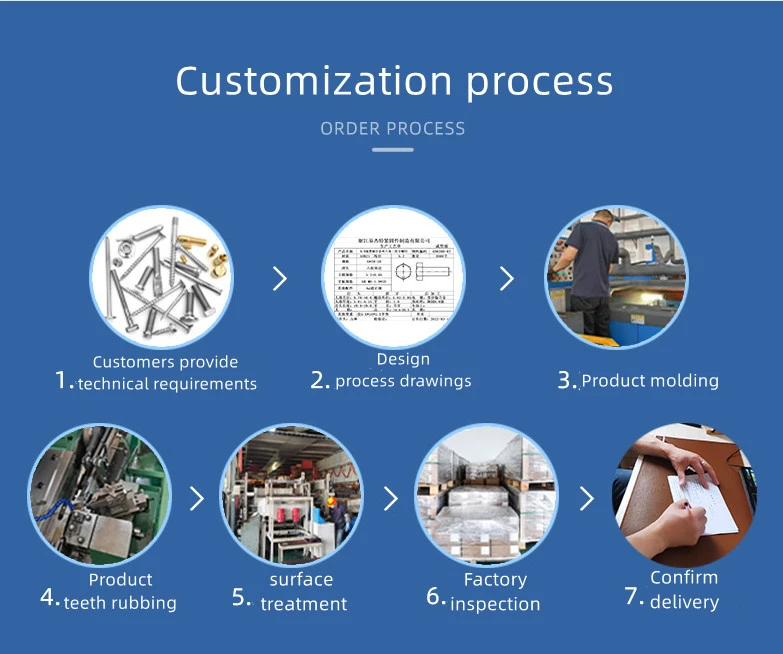
1. Cut, use special scissors in one direction to remove the seed material we need from the material stuck in the shear mold.
2. First punching, this step mainly involves the rear punch die pressing the blank material against the punch die to squeeze the blank material, and then pushing the blank material out after slowly forming.
3. Second punch, this step is similar to the above step, which is to carry out a second large die, punch and extrusion die, so that the blank will become an oblate shape after the processing is completed.
4. Three-punch, this is the third time of processing and molding. Use the hexagonal three-punch die kernel for shearing. When the hexagonal head of the blank is formed and slowly comes out, push the blank into the mold for the third time. Finally, when It's done when the hex head is cut off.‌